A 65-year-old female patient was diagnosed to have multiple gallstones. The resident performed a follow up scan and activated color Doppler and positioned the color Doppler box in the region of the gallstones. The gallstones showed some color Doppler signal.
What is this known as?
A. Color Doppler color enhancement
B. Color Doppler bleeding artifact
C. Aliasing
D. Twinkle artifact
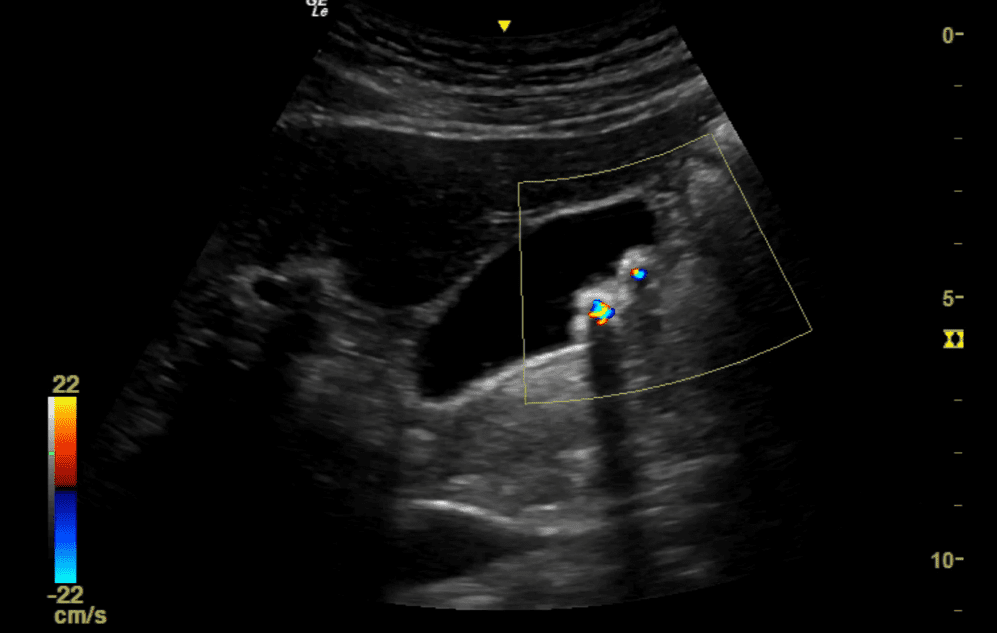
This is known as the Twinkle artifact.
Explanation
The twinkle artifact is seen when a color Doppler box is placed over a calculus. This artifact has been found to be very sensitive for detection of small stones in the gallbladder, kidneys, ureters, or the urinary bladder. To enhance the twinkling, you may consider decreasing the pulse repetition frequency (PRF).
References
1. Hosn, S., Bell, D. Twinkling artifact. Reference article, Radiopaedia.org. Published February 20, 2013. Accessed January 4, 2022. https://doi.org/10.53347/rID-21828
Was this content helpful?
Access the full POCUS Learning Library for FREE!
Share a few details so we can tailor new content to your specialty and region.