Victor Rao MBBS, DMRD, RDMS
Introduction
A practical minimal core Point-of-Care Ultrasound (POCUS) curriculum for family medicine residents can be built around a selected set of high‑yield diagnostic and procedural applications (lung, cardiac, abdominal aorta, renal/bladder, DVT, soft tissue/MSK, basic OB, and simple procedures), with longitudinal integration and graduated competence over three years. Even though a select list of practice domains are recommended, clinicians can choose to add more to their list of topics.
Guiding Framework Strategy
Below is a concise, evidence‑based structure you could adapt as a baseline curriculum. Residency surveys and AAFP resources show broad uptake of POCUS, but large variability in scope, so program directors are advised to define a core, program‑specific curriculum rather than attempting full‑scope from the outset. Many have attempted to cover the full scope of POCUS and were unable to achieve success.
Recent commentary notes that POCUS exposure is now considered a “detail requirement” in ACGME‑accredited family medicine residencies, reinforcing the need for a standardized minimal skill set.
Core POCUS Diagnostic Applications
A minimal curriculum for primary care has converged on a limited set of diagnostic POCUS examinations for novice learners. Let us look at the recommended POCUS skills.
- Fundamentals
- Basic ultrasound physics
- Ultrasound artifacts
- Knobology
- Transducer selection
- Ultrasound safety and infection control
- Lung Ultrasound
- B‑lines
- Pleural effusion
- Pneumothorax
- Lung consolidation pattern recognition
- Focused Cardiac
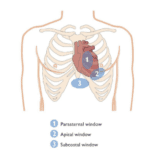
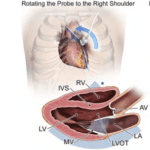
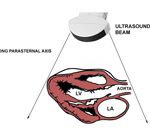
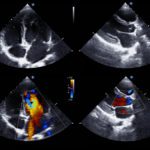
- PLAX view, PSAX views, A4C views, Subcostal view
- Gross LV function estimation
- Pericardial effusion and cardiac tamponade physiology
- Basic simple hemodynamic questions along with IVC assessment for volume status and approximate CVP and a general idea of VExUS protocol
- Abdomen
- RUQ (gallbladder for cholelithiasis and cholecystitis)
- Identify free fluid/ascites
- Abdominal aorta aneurysm (AAA) screening
- Renal/bladder (KUB)
- Hydronephrosis evaluation
- Bladder volume/urinary retention assessment
- DVT
- Limited proximal lower extremity compression ultrasound
- Soft Tissue/MSK
- Abscess vs cellulitis
- Joint effusion identification
- Long bone fracture
- Foreign body recognition.
- Basic OB
- Confirmation of IUP
- Fetal cardiac activity
- Fetal biometry
- Ectopic pregnancy
- Heterotopic pregnancy
- Placenta previa
- Procedural applications
- Vascular access – Differentiating vein/artery, basic peripheral/central line guidance
- Paracentesis and thoracentesis – Using ultrasound to identify deep fluid pockets, determine safe needle trajectory, and avoid complications.
- Joint injections/aspirations – Ultrasound guidance for large joints (Shoulder and knee and associated bursae)
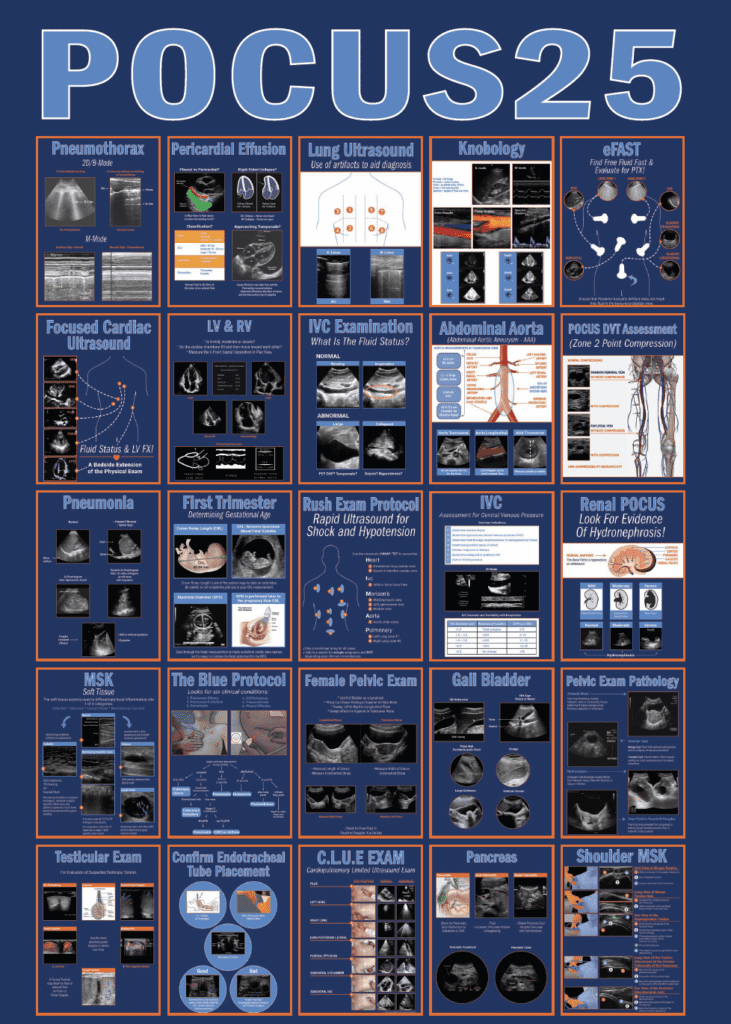
Figure 1. Screenshot of the POCUS25 poster. You may access and download the full poster in high resolution here. This may be a useful source for POCUS learners. To learn about the individual 25 POCUS practice domains, click here.
Longitudinal structure by training year
Programs with established POCUS curricula typically use a longitudinal model, mixing asynchronous modules and hands‑on scanning, sometimes with dedicated electives.
PGY‑1
POCUS Fundamentals (Ultrasound device operation, artifacts, basic knobology, image optimization) and basic normal anatomy for lungs, cardiac, RUQ, renal/bladder.
PGY‑2
Applied diagnostic scans for common complaints (dyspnea, abdominal pain, suspected DVT, early pregnancy) with supervised interpretation and introduction to simple procedures.
PGY‑3
Integration into real‑time decision‑making, independent performance with faculty over‑read, and competence in selected ultrasound‑guided procedures; some programs add a 2–4-week ultrasound elective at this stage.
Competence and Assessment
- Residency curricula described in the family medicine literature emphasize competency‑based outcomes, using logbooks and direct observation.
- Defined minimum numbers of supervised scans per application (e.g., lung, cardiac, AAA, renal/bladder), documented in a log or portfolio.
- Structured evaluations at the end of focused rotations or longitudinal blocks, with faculty review of stored images and case documentation.
- Use of standardized commercial or society‑endorsed content (e.g., POCUS Certification Academy (PCA) – Learning Library, Philips, GE Vscan, Butterfly, EchoNous, SonoSite, Clarius etc.) for asynchronous learning aligned with AAFP POCUS recommendations.
Final Thoughts
POCUS is an integral part of patient diagnosis and management. Residency programs struggle to implement POCUS in their program in a meaningful way. Having a structured approach with well-defined simple goals would be the way to achieve success. Once residents are comfortable and confident using POCUS in their daily practice, they would naturally venture out in additional POCUS skillsets. The goal of this blog article is to help programs design a POCUS program that will be guaranteed to succeed.
References
- https://www.pocus.org/wp-content/uploads/pdf/POCUS_25.pdf
- https://www.ncbi.nlm.nih.gov/books/NBK470373/
- https://www.aafp.org/fpm/2020/1100/p33
- https://clarius.com/blog/from-everest-to-the-office-5-pocus-exams-every-primary-care-physician-should-master/
- https://www.butterflynetwork.com/pocus-in-primary-care
- https://www.aafp.org/fpm/2020/1100/p33
- DOI: 10.7759/cureus.28373. PMID: 36171847; PMCID: PMC9508689.
- https://www.physiciansweekly.com/post/hocus-pocus-the-future-of-point-of-care-ultrasound-in-clinical-settings
- https://journals.stfm.org/familymedicine/2020/july-august/hall-2019-0387/ ; DOI: 10.22454/FamMed.2020.223648
*Disclaimer
AI (Perplexity Pro) was used to conduct extensive research on this topic and draft the outline. The author has reviewed, verified and edited the content for accuracy and relevance to POCUS primary care. Some views are the author’s own views but are based on consensus of the medical community.
Was this learning resource valuable?
Access the full POCUS Learning Library for FREE!
Share a few details so we can tailor new content to your specialty and region.