By Jiahe Zhang
Cardiac arrest remains one of the most common urgent clinical emergencies. Although survival rates for in-hospital cardiac arrest have gradually improved, the overall discharge rate in the United States is still only about 25%. This highlights the importance of rapid and accurate bedside assessment during resuscitation.
This webinar explores how point-of-care ultrasound (POCUS) can help clinicians recognize reversible causes of cardiac arrest, differentiate cardiac rhythms, monitor effectiveness of resuscitation efforts, provide prognostic information, and guide procedures.
Key Takeaways From the On-demand Webinar: POCUS: When Every Beat Counts, Even the One We Can’t Hear
1. POCUS can lengthen CPR pauses, but proper training greatly reduces delays.
Studies show that CPR interruptions are slightly longer when ultrasound is used, with pauses around 19 seconds compared to 14 seconds without ultrasound. Clinicians with structured ultrasound training consistently achieve shorter pauses, emphasizing the importance of preparation and coordinated workflow.
2. Differentiating true PEA from Pseudo-PEA improves survival and neurological outcomes.
POCUS can detect organized cardiac motion even when a pulse is absent. Patients with pseudo-PEA demonstrate significantly better survival rates and neurological outcomes than those with true PEA, making accurate diagnosis essential.
3. Cardiac standstill is strongly associated with mortality but is not predictive.
The absence of cardiac activity on ultrasound has a very high predictive value for non-survival, yet a small proportion of patients may still regain spontaneous circulation. Clinical decisions should therefore consider the entire context rather than relying on a single finding.
4. TEE improves visualization during cardiac arrest and reduces interruption time.
Transesophageal echocardiography provides superior image quality, allows detection of fine ventricular fibrillation, and enables shorter CPR interruptions. It requires more training and is invasive but can be highly valuable in some settings.
5. Continuous CPR with minimal pauses remains essential for preserving neurological function.
Neurological outcomes decline by approximately 13% for every additional minute of no-flow time. Current guidelines recommend limiting pulse checks to fewer than 10 seconds and resuming compressions immediately if a pulse cannot be confirmed.
Clinical Application
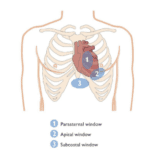
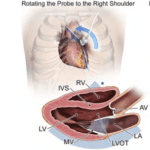
A patient presents with organized electrical activity on ECG/EKG and no palpable pulse. During the rhythm check, a rapid subcostal view shows weak cardiac motion consistent with pseudo-PEA. The team continues high quality CPR while using ultrasound directed assessment for reversible causes. Right ventricular dilation and septal shift raise concern for massive pulmonary embolism, and a focused DVT compression exam supports thrombosis.
This ultrasound guided differentiation shifts management toward targeted treatment while maintaining CPR quality, improving the likelihood of recovery.
Conclusion
POCUS delivers essential bedside insights during cardiac arrest that surpass traditional pulse checks. By identifying reversible causes, recognizing pseudo-PEA, and evaluating cardiac activity, it enables timely, informed resuscitation decisions. When supported by structured training and protocols, ultrasound enhances care without compromising CPR quality, serving as a critical extension of clinical judgment to improve patient outcomes.
Watch the full webinar: POCUS: When Every Beat Counts, Even the One We Can’t Hear
In addition, we invite learners to continue exploring additional webinars and self-paced POCUS modules to strengthen their skills and stay aligned with evolving best practices in ultrasound education.
Jiahe Zhang is an intern with the POCUS Certification Academy.
Access the full POCUS Learning Library for FREE!
Share a few details so we can tailor new content to your specialty and region.