By Arwen Chen
January is an important month for women and families. It’s National Birth Defects Awareness Month, which focuses on early detection and prevention, and it also includes Maternal Health Awareness Day on January 23, which highlights the health of mothers. Both events share the same goal, helping mothers and babies have the best start in life.
For the POCUS community, this is a chance to show how bedside ultrasound supports maternal and fetal health by helping providers make timely and informed decisions during pregnancy and after birth.
National Birth Defects Awareness Month
Every year, approximately 1 in 33 babies in the U.S. is born with a birth defect, ranging from congenital heart conditions to neural tube defects. While not all can be prevented, raising awareness during January helps connect families with resources and promote proactive prenatal care. Ultrasound plays a central role in this mission.
In the first trimester, clinicians use nuchal translucency scans to identify potential chromosomal anomalies. In the second trimester, the standard anatomy or anomaly scan (typically between 18–22 weeks) evaluates fetal growth, organ development, and detects structural issues. Conditions like spina bifida may be caught via focused spine ultrasound, with follow‑up diagnostic tools like amniocentesis guided carefully by ultrasound imaging.
Maternal Health Awareness Day
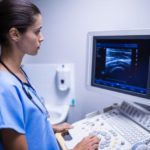
Every January 23, Maternal Health Awareness Day reminds us that a mother’s health is the foundation for healthy outcomes. This includes her physical health, emotional well-being, and access to care. POCUS is changing how maternal emergencies are detected and treated. Bedside ultrasound can quickly check the heart, lungs, abdomen, and blood vessels in seriously ill pregnant patients, giving critical information when every second counts.
Research shows that when trained midwives use POCUS, undiagnosed breech presentations at term drop from about 16% to just 3.5%. This improvement helps ensure safer deliveries and better outcomes for babies. It shows that early detection is not only about finding anomalies, but it is also about planning for a safe birth and protecting the mother’s health.
How POCUS Supports Mothers and Babies
POCUS is a vital tool throughout maternal and fetal care. It links early screening, diagnostic tests, and urgent interventions into one continuous process. It can detect anomalies early through scans like nuchal translucency and detailed anatomy checks. It also improves safety during procedures such as amniocentesis by offering real-time guidance.
In emergencies, POCUS allows quick assessment of the heart, lungs, abdomen, and blood vessels at the bedside, helping clinicians act fast and make informed choices. Even in routine care, it supports delivery planning by confirming fetal position and presentation, lowering the chance of unexpected complications. In this way, POCUS combines prevention, diagnosis, and emergency care into one flexible resource for protecting mothers and babies.
January is a perfect time to highlight the value of POCUS. Clinical educators can add obstetric POCUS training to their programs. Clinicians can share real-life cases on social media or within their professional networks to demonstrate how bedside ultrasound has impacted a diagnosis or delivery plan. Researchers can continue refining protocols that connect preventive screening with urgent care.
A child’s future begins long before birth, shaped by the mother’s health, nutrition, emotional well-being, and access to quality care during pregnancy. The conditions in the womb and the safety of the birth experience lay the foundation for lifelong health.
By uniting both January observances under the shared theme “Protecting the Next Generation,” we emphasize that when we invest in mothers, we are also investing in their children’s futures. POCUS provides timely and accurate insights from early screening to urgent intervention to ensure every mother and baby has the best possible start in life.
References
- https://www.cdc.gov/birth-defects/awareness-month/index.html
- https://www.first5nevada.org/news-and-articles/january-is-birth-defects-awareness-month-what-families-should-know-and-what-to-do/
- https://www.marchofdimes.org/learn-more-about-birth-defects
- https://pubmed.ncbi.nlm.nih.gov/40132463/
- https://en.wikipedia.org/wiki/Nuchal_scan
- https://en.wikipedia.org/wiki/Anomaly_scan
- https://en.wikipedia.org/wiki/Spina_bifida
- https://www.parents.com/amniocentesis-7500274
- https://journals.plos.org/plosmedicine/article?id=10.1371/journal.pmed.1004192
- https://en.wikipedia.org/wiki/Obstetric_ultrasonography
- https://pubmed.ncbi.nlm.nih.gov/40132463/
Arwen Chen is a student and intern with the POCUS Certification Academy. She is currently pursuing a Master of Public Health at Yale University.
Was this learning resource valuable?
Access the full POCUS Learning Library for FREE!
Share a few details so we can tailor new content to your specialty and region.